

Minor Arcana · Wands
Ten of Wands Tarot Card Meaning
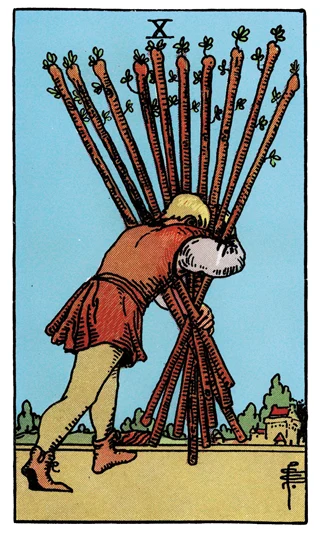
A bent figure struggles to carry ten heavy wands, nearly reaching their destination despite the overwhelming burden.
Overview
The Ten of Wands shows effort becoming a burden as a goal nears completion. The ten gathers the Wands' drive, responsibility, and achievement into a load that may be too large for one person. It asks whether every task still belongs to you and whether reaching the destination matters if the route damages your health, relationships, or ability to continue.
Upright and reversed meanings
Upright meaning
Upright, this card points to heavy responsibility, overcommitment, and the stress of carrying too many priorities at once. You may be capable of the work and still need to question the way it is organized. Separate essential tasks from inherited expectations, then protect the quality of the final stage by setting limits instead of treating strain as success.
Reversed meaning
Reversed, the Ten of Wands can describe release, delegation, or a collapse that forces a burden into view. You may be dropping responsibilities that were never yours, or avoiding a necessary obligation without a transition plan. Be honest about capacity, transfer work with clear information, and let go of the parts that no longer serve the goal rather than waiting for exhaustion to decide.
Love and relationships
In a relationship, the card can show one person carrying planning, emotional labor, household tasks, or the pressure to keep everything functioning. In dating, you may be bringing obligations that leave little room for connection. Reversed, resentment may surface as you ask for a fairer division or release an outdated role. Discuss the actual workload and make a specific agreement instead of hoping the other person notices.
Career and work
At work, the Ten of Wands often reflects an overloaded role, too many deadlines, or responsibility that has accumulated without enough authority or support. Rank the deliverables, renegotiate scope, and delegate with context. With money, list recurring obligations and protect essentials before taking on another commitment. Reversed, a handoff or reduction can restore capacity, but document what must still be completed.
Yes or no tendency
no
Upright, the card leans no to adding more weight before the existing load is addressed. It may still support finishing a defined commitment with a better structure, but it does not promise that endurance alone will make the situation healthy. Reversed, the answer can become a conditional yes if responsibilities are shared, reduced, or released rather than carried in the same way.
Practical advice
Make three lists: must finish, can delegate, and can stop. Tell the relevant person what needs to change and by when. Build a handoff or recovery step into the plan so relief does not create a new emergency.
Reflection question
- Which responsibility am I carrying because it is mine, and which one am I carrying because I have never renegotiated it?
Use this card in a reading
A card meaning becomes more useful when it is connected to a clear question and real circumstances. Draw a focused card for love, career, or a yes-or-no decision.
Common questions
What does Ten of Wands mean in tarot?
Ten of Wands describes an archetypal energy rather than a fixed prediction. Its meaning changes with the question, position, surrounding cards, and orientation.
Is Ten of Wands reversed always negative?
No. A reversed card can point to blocked, internal, delayed, or excessive energy. It is an invitation to examine how the card is being expressed.
What does Ten of Wands mean for love?
In a relationship, the card can show one person carrying planning, emotional labor, household tasks, or the pressure to keep everything functioning. In dating, you may be bringing obligations that leave little room for connection. Reversed, resentment may surface as you ask for a fairer division or release an outdated role. Discuss the actual workload and make a specific agreement instead of hoping the other person notices.
Is Ten of Wands a yes or no card?
no. Upright, the card leans no to adding more weight before the existing load is addressed. It may still support finishing a defined commitment with a better structure, but it does not promise that endurance alone will make the situation healthy. Reversed, the answer can become a conditional yes if responsibilities are shared, reduced, or released rather than carried in the same way.